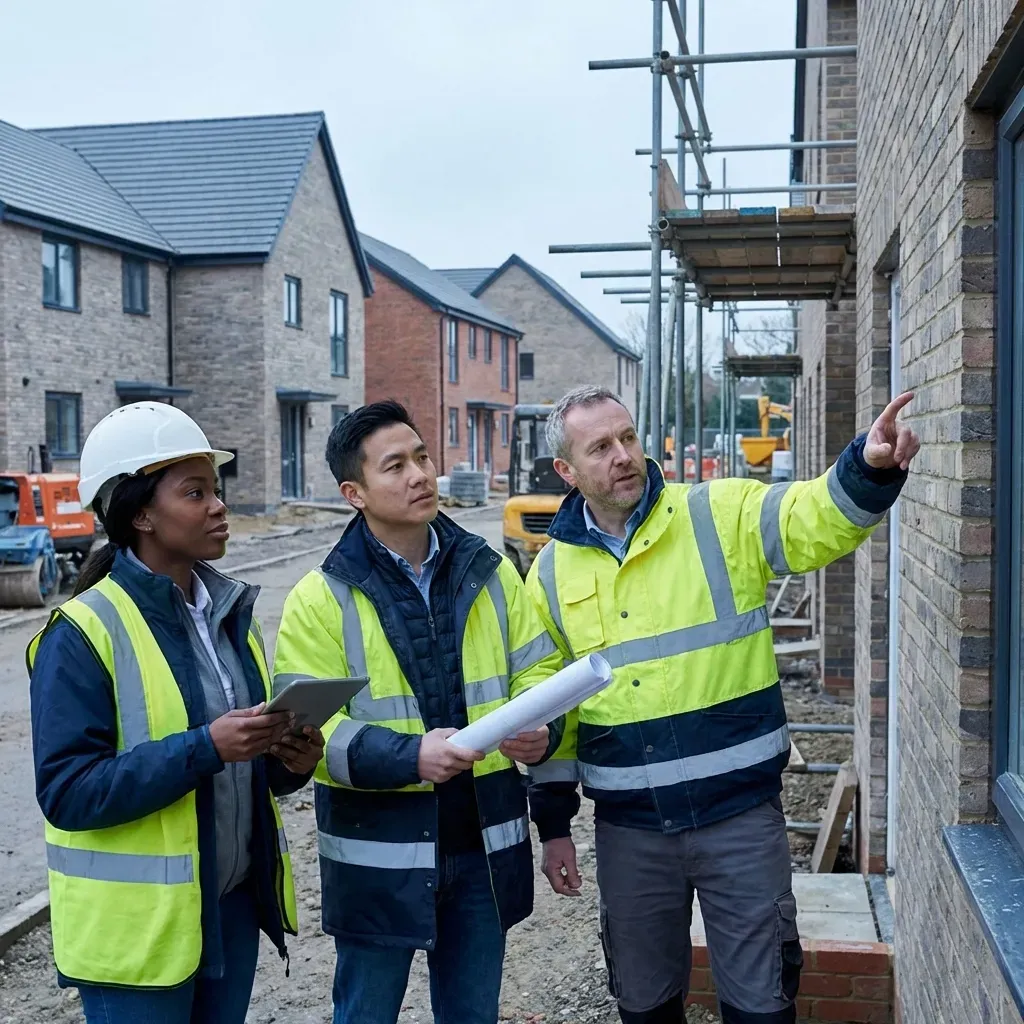
Looking for a Reliable Way to Build in Ghana?
Looking for a Reliable Way to Build in Ghana? Here Are 10 Things Every UK Diaspora Developer Should Know

Building a property in Ghana is an ambition held by many in the UK diaspora. Whether it’s a family home for retirement, a luxury villa in East Legon, or a commercial development to tap into the growing West African market, the potential is enormous.
However, we often see a recurring pattern. A developer starts with high hopes, only to be met with shifting costs, "disappearing" contractors, or legal disputes over land. It doesn't have to be that way.
Every successful construction project has one thing in common: a clear roadmap and professional oversight. At Osei Management & Consulting Ltd, we act as the bridge between your UK expectations and the Ghanaian reality.
Here are 10 essential things every UK-based developer should know before breaking ground in Ghana.
1. Land Verification is Your First Priority
In the UK, we take the Land Registry for granted. In Ghana, the system is far more complex. It is not uncommon for multiple parties to claim ownership of the same plot.
Buying land without strict legal checks can turn your dream into a nightmare. You must ensure proper documentation through the Lands Commission and work with credible legal professionals to verify titles.
We always recommend a "boots on the ground" approach. Don't just take a seller’s word or a scanned document over WhatsApp. You need a physical search and a formal verification process to ensure the person selling the land actually has the right to do so.
2. Understand the Cost Landscape: UK vs Ghana
One of the biggest shocks for UK diaspora developers is the cost structure. In the UK, many development costs are shared or managed through established service provider networks. In Ghana, almost every single expense: from extending power lines to your site to clearing the access road: falls directly on the property owner.
This is where quantity surveying services become your not-so-secret weapon. Without a professional Bill of Quantities, you are essentially guessing your budget.
We often see developers run out of funds halfway through a project because they underestimated the "ancillary" costs that simply don't exist in the same way in the UK market.
3. Hire a Trustworthy Project Overseer
Managing a construction project from London, Birmingham, or Manchester is inherently risky. Relying on family members or a contractor’s own self-reporting is a recipe for delay.
You need an independent project manager who understands both UK standards and local Ghanaian practices. Think of them as the guardians of your budget. They are there to ensure that the materials you paid for actually arrive on-site and that the work being done meets the agreed-upon quality standards.
If you are looking for professional oversight, our team at OMC Ghana provides that essential link, ensuring your project stays on track while you are thousands of miles away.
4. Navigate the Permit Process Early
You cannot start building until you have a permit from the local District or Municipal Assembly. While the process is theoretically straightforward, it can become a bottleneck if not managed correctly.
Usually, a permit can be secured relatively quickly if your documentation is in order. However, if you start work without one, you risk the dreaded "STOP WORK" notice painted on your walls.
This doesn't just cause delays; it can lead to heavy fines and even the demolition of unapproved structures. We recommend having your architectural drawings and site plans vetted by a local professional who knows the specific requirements of the local authority in your area.
5. Account for Aggressive Price Fluctuations
The Ghanaian economy can be volatile, especially regarding the cost of imported materials like steel, glass, and high-end finishes. What cost 100 Cedis today might cost 120 Cedis next month.
UK developers are used to relatively stable quotes. In Ghana, we advise building a significant contingency fund into your budget: typically 15% to 20%.
Furthermore, try to buy your bulk materials: like blocks, cement, and reinforcement bars: as early as possible. Locking in prices early is one of the best ways to protect your project from inflation and currency devaluation.

6. Anticipate Money Transfer Challenges
Sending large sums of money from the UK to Ghana for construction costs is not as simple as a standard bank transfer. Due to fraud prevention and Anti-Money Laundering (AML) measures, transfer agencies and banks often trigger alerts on large transactions.
This can cause delays in paying your contractors, which in turn halts work on-site. It is a common issue we see: a contractor leaves a site because they weren't paid on Friday, and by the time the money clears on Wednesday, they have moved their crew to another project.
Plan your transfers in advance. Establish a reliable channel for moving funds and ensure you have factored in the transfer fees and the exchange rate spreads.
7. Joint Ventures: High Reward, High Risk
If you are a developer looking at larger projects, you might consider a Joint Venture (JV) with a local landowner or developer. This can be a fantastic way to access prime land without the huge upfront cost.
However, you must vet your partners thoroughly. Does the developer have a track record of finishing projects? Do they have the financial liquidity to see the project through?
A common pitfall is partnering with someone who completes the units but lacks the infrastructure to manage the completed estate. Always perform extensive due diligence on your JV partners before signing any contracts. You can learn more about how we help with this on our about page.
8. Build Long-Term Relationships with Contractors
In the UK, the construction industry is highly transactional. In Ghana, relationships are everything.
If you find a good plumber, electrician, or mason, keep them. By working with the same team over multiple phases or projects, you build a level of trust and loyalty.
Reliable contractors who know your expectations are more likely to give you better pricing and prioritize your site when they are busy. It’s worth being aware that the "cheapest" quote is rarely the best value in the long run. Professionalism and reliability are worth paying for.

9. Adapt to Regulatory Differences
It is important to acknowledge that property development structures in Ghana are generally less rigorous than those in the UK. This doesn't mean you should lower your standards; it means you have to be more rigorous as a developer.
Where a UK building inspector might visit a site multiple times to sign off on specific stages, in Ghana, the onus of quality control often falls on you and your management team.
This is why management services are vital. You need to ensure that the "mix" of the concrete is right, the foundations are deep enough, and the electrical wiring is safe, even if no one is forcing you to do so.
10. Plan for Maintenance and Longevity
The Ghanaian climate is beautiful but harsh on buildings. The combination of high humidity, intense sun, and (in coastal areas) salt air means that buildings age much faster than they do in the UK.
As a developer, you need to think about the long-term maintenance of the property. Are you using weather-resistant paint? Are your drainage systems capable of handling tropical downpours?
If you are building to sell or rent, your reputation as a developer depends on how the building looks three years after completion, not just on the day you hand over the keys. Think about the "aftercare" and how the property will be managed once the construction is finished.

Why Professional Oversight Matters
Building in Ghana as part of the UK diaspora is a bold and rewarding move. It is an opportunity to contribute to the growth of the nation while building a valuable asset for yourself and your family.
However, the "DIY" approach rarely works when you are 3,000 miles away. You need a partner who understands the local landscape but operates with the transparency and professionalism you expect in the UK.
At Osei Management & Consulting Ltd, we provide that peace of mind. From initial building surveying to final project delivery, we ensure that your investment is protected and your vision is realised.
Imagine a project where every decision is backed by precise numbers, where land titles are bulletproof, and where "distance" is no longer a barrier to quality. That is the standard we bring to every development.
If you are planning a project in Ghana and want to ensure it is handled with professional care, contact us today. Let’s turn your vision into a reality, the right way.